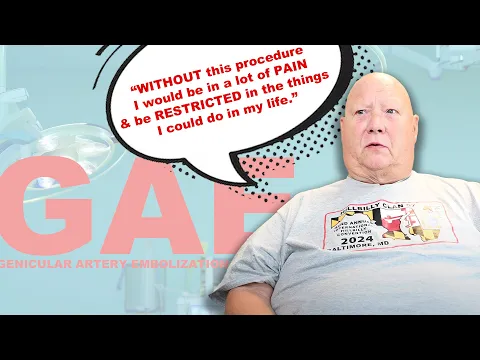

The best doctor to see for knee pain depends on the cause. A primary care doctor, orthopedic specialist, or sports medicine physician is often a good place to start. For people with knee osteoarthritis that has not improved with conservative treatment, a vascular surgeon trained in genicular artery embolization (GAE) may also be worth consulting.
Maybe your knee aches after a grocery trip. Perhaps stairs have become difficult, or an old injury keeps flaring up. Choosing a knee pain doctor starts with understanding your symptoms and finding someone who can explain what is happening.
At the Vascular Institute of Michigan (VIM), our vascular surgeons evaluate whether GAE is appropriate for patients with ongoing osteoarthritis pain.
Here is how to decide where to begin and when to explore another opinion.
What kind of doctor should I see first for knee pain?
A primary care doctor is a sensible first stop when your knee pain is new, the cause is unclear, or you need help finding the right specialist.
Your doctor can ask how the pain started, examine your knee, and consider whether the problem involves arthritis, an injury, or another condition. They can also review your medications and medical history before recommending treatment.
Be specific about what has changed. “My knee hurts” gives your doctor less information than “I can walk for ten minutes before I need to sit down.”
Mention swelling, locking, difficulty straightening the knee, and whether it feels unstable. These details help guide the next step. Depending on your symptoms, your doctor may begin treatment or refer you to a knee pain specialist.
Can a vascular specialist treat knee pain?
A vascular specialist with specific training in embolization may treat selected patients whose knee pain is caused by osteoarthritis.
This can sound surprising. Why would someone who treats blood vessels evaluate an aching knee?
In osteoarthritis, the joint lining, called the synovium, can become inflamed. Abnormal small blood vessels may develop around that inflamed tissue. GAE targets this abnormal blood supply to reduce inflammation and pain.
At the Vascular Institute of Michigan, we offer genicular artery embolization for knee pain at our Flint practice.
A consultation should first establish whether osteoarthritis explains your symptoms and whether GAE fits your situation. It does not replace an evaluation for a new injury, an infection, or another cause of knee pain.
When should I see an orthopedic knee specialist?
An orthopedic specialist is often appropriate for persistent knee pain, suspected structural injuries, instability, or arthritis that significantly limits daily activities.
Orthopedic physicians evaluate problems involving bones, cartilage, ligaments, and tendons. If your pain began after a fall or twisting injury, or your knee catches or gives way, an orthopedic assessment may help identify the cause.
Seeing an orthopedic surgeon does not mean you are agreeing to surgery. Many patients receive nonsurgical care first.
For knee arthritis, surgery may become an option when pain and disability continue despite appropriate treatment. The American Academy of Orthopaedic Surgeons explains knee arthritis and its treatment options, including how symptoms, examination findings, and imaging inform decisions.
Is a sports medicine doctor a good choice for knee pain?
A sports medicine physician can be a good choice for knee pain related to exercise, repetitive strain, or an injury that may respond to nonsurgical care.
You do not need to be an athlete to see one. Knee discomfort from gardening, climbing stairs, or starting a walking routine can also bring someone to a sports medicine office.
Treatment may include physical therapy, activity changes, medication, or selected injections. Strength, flexibility, and movement patterns may all matter.
A useful appointment should connect treatment to your goals. Returning to running is one goal. Getting through a work shift or walking your dog comfortably is another. Tell your doctor what you want your knee to let you do again.
When is a rheumatologist the right knee pain specialist?
A rheumatologist may be appropriate when knee pain could be part of an inflammatory condition, such as rheumatoid arthritis, psoriatic arthritis, or gout.
Persistent joint swelling, prolonged morning stiffness, or symptoms affecting several joints deserve attention. These symptoms do not establish a diagnosis, but they can help your primary care doctor decide whether a rheumatology referral makes sense.
Rheumatologists diagnose and manage conditions that affect joints through inflammation or immune system activity. This distinction matters because treatment should address the condition causing the pain. A procedure intended for osteoarthritis may not address an inflammatory disease that requires medication and ongoing monitoring.
What is GAE for knee pain, and who might consider it?
GAE is a minimally invasive, catheter-based procedure that may be considered for knee osteoarthritis when conservative treatment has not provided enough relief.
Using imaging guidance, the physician guides a thin catheter into arteries supplying the knee and delivers tiny particles into selected abnormal vessels. The procedure aims to reduce the blood supply associated with inflamed joint tissue.
GAE does not rebuild cartilage or correct joint deformity. Its purpose is symptom relief.
Someone considering GAE may have ongoing pain despite physical therapy, appropriate medication, activity changes, or injections. They may be unable to undergo knee replacement or wish to discuss options before deciding on surgery.
The Society of Interventional Radiology supports GAE for appropriately selected patients while calling for larger randomized trials.
How effective is GAE, and what are the risks?
Research on GAE is encouraging. Many patients in published studies report less knee pain and better function in the months after treatment. Results vary from person to person, though, and the evidence is still developing.
Relief is not always immediate. Some people notice improvement within a few weeks, while others take longer. Ask your physician what a realistic timeline looks like for you, and what happens if your symptoms do not improve.
Like any procedure, GAE carries risks. Possible side effects include bruising or soreness where the catheter was placed and temporary skin redness or discoloration over the knee. Less common problems include skin irritation, numbness, or particles reaching unintended tissue. Because the procedure uses contrast dye, tell your care team about any contrast allergy or kidney problems.
A careful consultation should cover your health history, your imaging, and whether the potential benefit outweighs the risks in your situation.
What happens during a GAE procedure at the Vascular Institute of Michigan?
GAE is done right here at our Flint office, and you go home the same day.
Here’s what to expect:
- You stay relaxed and comfortable. We use light sedation, so you won’t be fully put to sleep.
- It starts with a small needle poke. This is usually in your groin or near your foot.
- The doctor uses live X-ray images to guide the treatment to the blood vessels around your knee.
- The procedure takes about an hour.
- You’ll rest with us for one to two hours before heading home.
After your procedure
Most people are back to their normal routine within a couple of days. Before you leave, your care team will tell you how active you can be and when to come back for your follow-up visit.
When should knee pain be checked right away?
Some knee symptoms need prompt medical attention rather than a routine appointment. Seek care quickly if you notice any of the following:
- A hot, red, swollen knee, especially with a fever
- Inability to put weight on the leg
- A knee that looks deformed after a fall or injury
- Sudden, severe pain or swelling without a clear cause
- Pain, swelling, or warmth in the calf, which can signal a blood clot
These symptoms can point to an infection, fracture, or other condition that needs immediate treatment. GAE is not intended for these situations.
How do I choose the right doctor for my knee pain?
The best doctor for knee pain is one whose expertise matches the cause of your symptoms and who takes time to explain your options.
A new or unexplained problem is a good reason to start with your primary care doctor. A suspected injury or structural problem may call for an orthopedic or sports medicine physician. Swelling and stiffness in several joints may point toward a rheumatologist. Ongoing osteoarthritis pain after conservative care may be a reason to ask about GAE.
When choosing a knee pain clinic, ask these questions to understand your diagnosis and treatment options:
- What do you think is causing my knee pain?
- Which treatments make sense for my diagnosis, including nonsurgical options?
- What results can I realistically expect, and how soon?
- What are the risks, and what is the next step if this treatment does not help?
A good doctor will welcome these questions. You should leave your appointment with a clearer picture of your knee, not more confusion.
Explore GAE at the Vascular Institute of Michigan
If knee osteoarthritis still limits your daily life after physical therapy, medication, or injections, you may have more options than living with the pain or moving straight to surgery.
Our team in Flint can review your history and imaging, talk through your goals, and help you decide whether GAE is a good fit. Visit our GAE page to take a short quiz and learn whether a GAE consultation may be appropriate, or call (810) 535-5555 to schedule a consultation.
This article is for general education and is not a substitute for medical advice. Talk with a qualified healthcare provider about your symptoms and treatment options.